
The World’s Smallest Prairie
May 12, 2026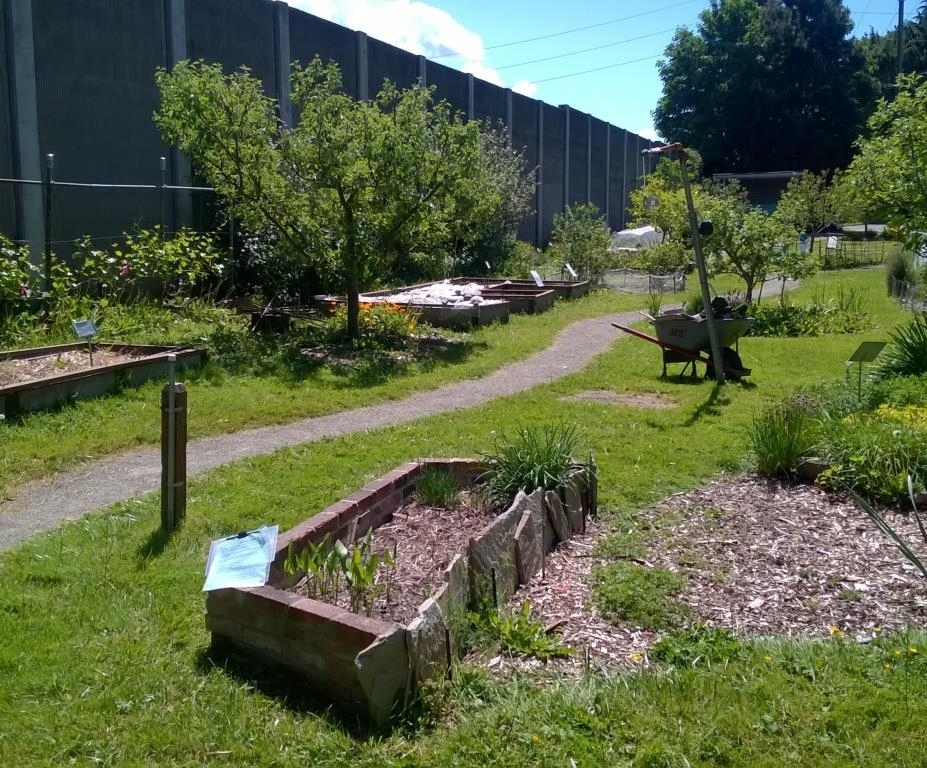
We have a prairie at FECO! It’s three feet by ten feet. (I didn’t want to take on too much.) The area is a bit wet; an apple tree rotted there. My goal was a mini prairie with edible native plants. In 2024, I planted early blue violet (Viola adunca), nodding onion (Allium cernuum ), glacier lily (Erythronium grandiflorum ), chocolate lily (Fritillaria camschatcensis L.), yampah (Perideridia ), and arrowleaf balsamroot (Balsamorhiza sagittata). Most came up the first year but the only survivors this year are nodding onion and arrowleaf balasamroot. More knowledge needed!
Luckily, last week I was able to attend a tour of the new prairie project at Magnuson Park. Dean Drugge, self-described grunt and Jonathan Hallett, designer, described their process, successes and setbacks.
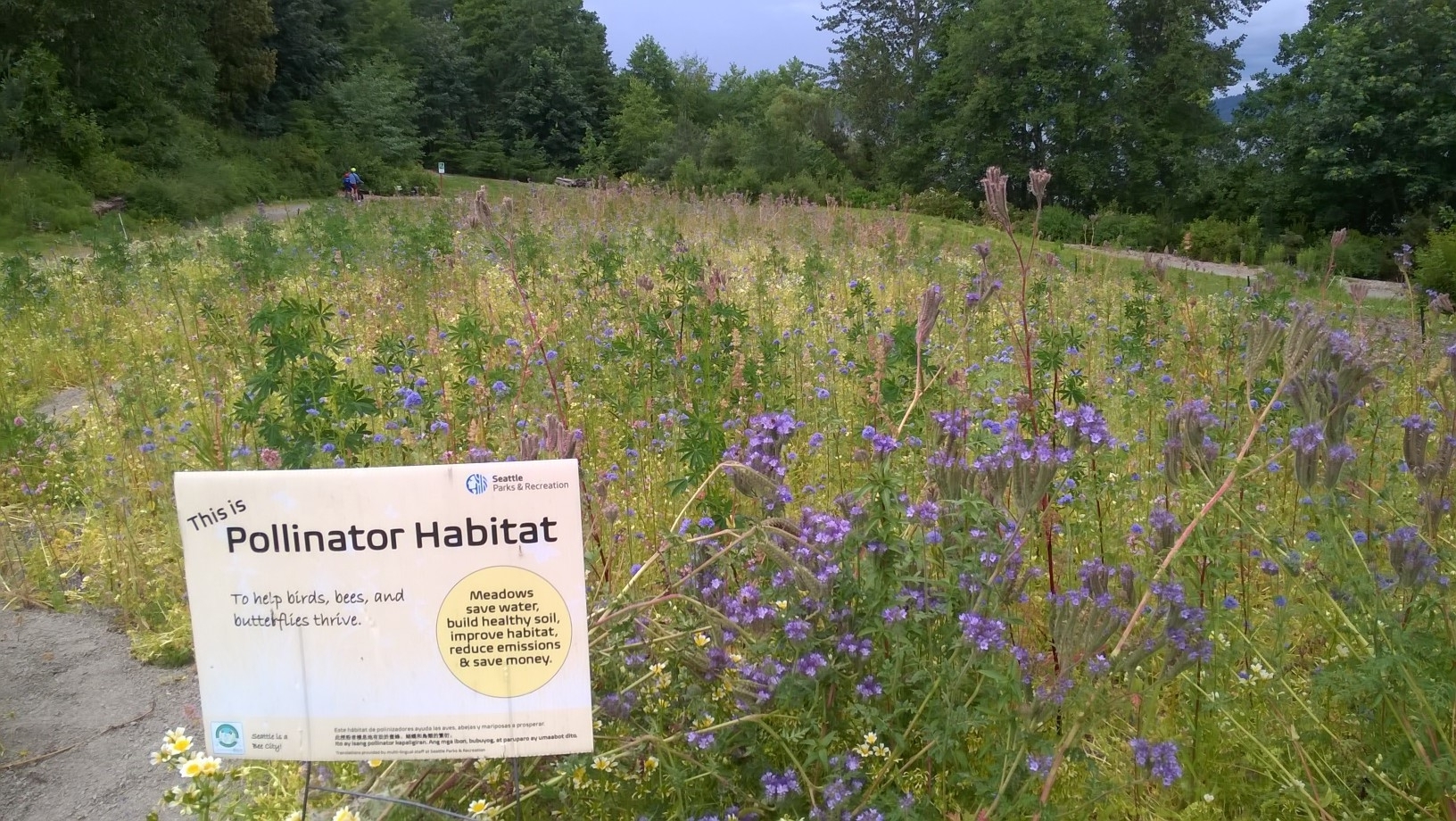 In 2024, volunteers bought giant pieces of flexible ‘tarp’ (from billboards) and covered a large area of grass and clover for a year. The plastic mulch killed the grass but the clover has a hard seed shell and came back strong to make mats within the prairie.
The next year they pulled the tarp off and laid it on the next section of grass. To the uncovered area, the volunteers added three inches of a sand mixture and then, in the fall, planted a Northwest Meadowscape wildflower mix (grasses, annuals and perennials). The team planned for flowers to benefit invertebrates 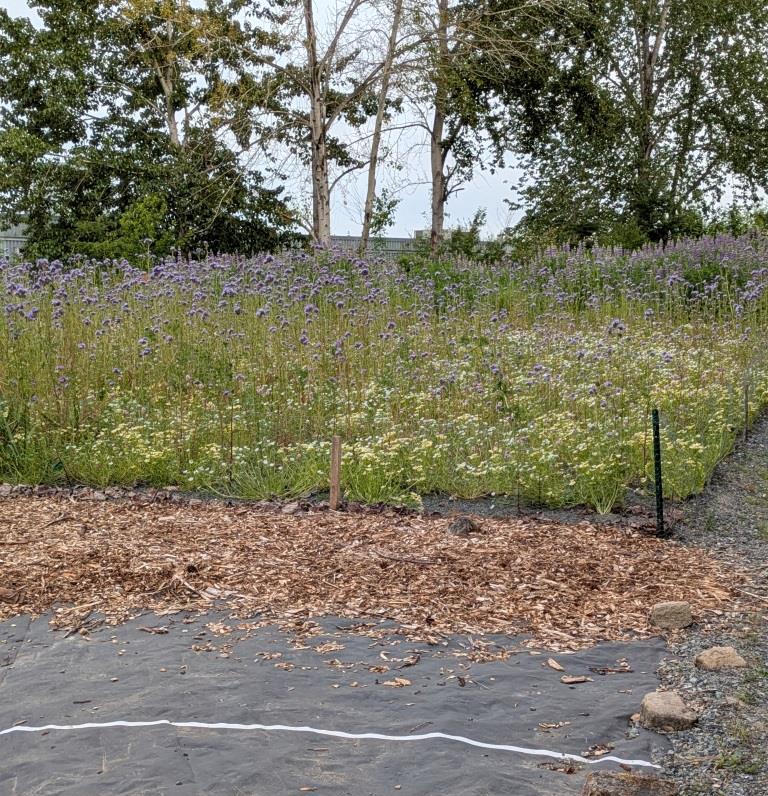 (bees, wasps, hover flies, etc.) Mostly annual flowers came up the first year, then grasses the second year. You can see a plastic mulch section in the photo and also the transition from a first year section to a second year section further north.
They cut the new vegetation in the fall. (Perhaps some day they will be allowed to do prescribed burns, as did the Native Americans.) After cutting, they rake out most of the organic matter. That may sound counter intuitive but, a layer of organic matter makes for richer soil that invites unintentional plants throughout the winter. Prairie plants thrive on poor soil!
for work parties
Please email to volunteer
freewayestatescommunityorchard@gmail
Imagine trying to manage the mix of plants in a homemade prairie! One plant they now wish was not in the mix is riverbank lupine (Lupinus rivularis). It’s very aggressive. Another plant they are keeping their eye on is meadow barley (Hordeum brachyantherum).
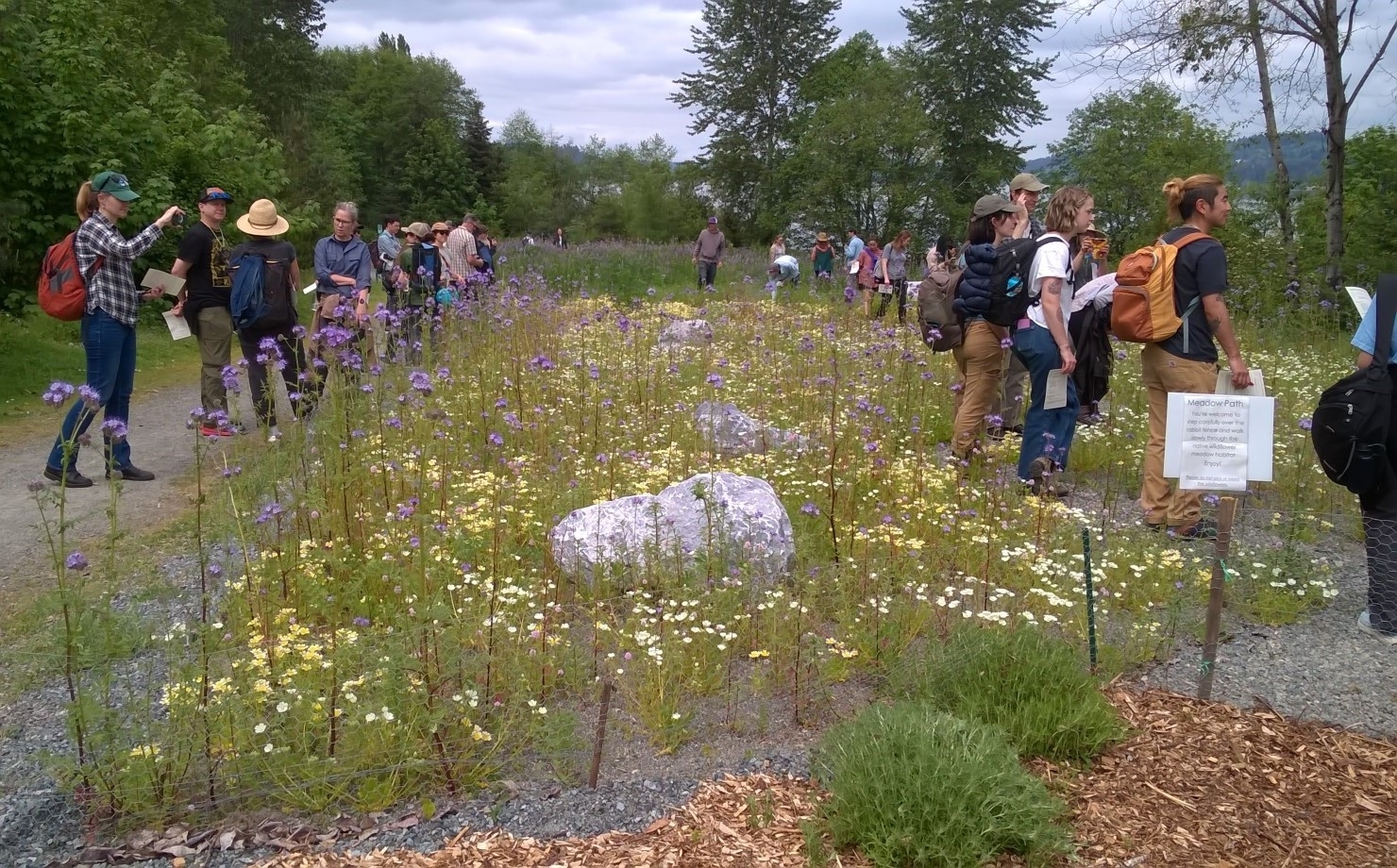 Insect enthusiasts were among the many guests. They witnessed five species of bumble bees, five species of hover flies, parasatoid wasps and a mason bee!
Back at FECO I went about my business. I was adding Loop compost to the various beds. When I walked toward our prairie I pulled the compost bag close to my chest. No! Prairies want poor soil. The next day I watered. I walked by the prairie with my watering can and put my hand over the spout. No! Native prairie plants don’t naturally get extra water.
Days later, I added some Roemer’s fescue (Festuca romerii) to the prairie bed. Now loaded with more information I pushed aside the heavy rich soil and made the fescue a nice bed of chicken grit!
Ruth
————-
Notes:
1) The prairie tour was hosted in collaboration with Northwest Natural Resource Group and the Puget Sound Seed Partnership. Dean Drugge is connected to the Green Seattle Partnership.
2) At the conclusion Jonathan recommended the book Sowing Beauty: Designing Flowering Meadows from Seed, by James Hitchmough, as a good book on ecological planting design.
FYI, I also found a link to a very interesting blog with James Hitchmough about the topic of incorporating non-native plants in meadow design.
https://www.thenewperennialist.com/tea-spiller-thriller-james-hitchmough-on-native-non-native-in-garden-ecology/
Resources:
Prairie Landowner Guide FOR WESTERN WASHINGTON
Sara Noland and Laurel Carver, April 2011
https://cascadiaprairieoak.org/wp-content/uploads/2013/08/Prairie-Landowner-Guide-Western-WA1.pdf
…”Today, our native prairies are one of the most endangered ecosystems in the United States. What was once over 150,000 acres of prairie in the Northwest has been reduced by 90 percent. Our remaining prairies face many continued threats, such as conversion for agriculture or land development, invasive weeds, oak stands being overtaken by faster growing conifers, overgrazing, and a lack of the periodic fires that once maintained these areas as grasslands.”
Very interesting.
Thanks, Ruth !
Always fun and informative.