
Bach Or Black Sabbath – Which Concert Would The Plants Attend?
December 28, 2025
Our friend’s new cat, Nora, won’t come out from under the couch. I wanted to help so I gave Nora the CD, Bach: The Well-Tempered Clavier, Book 1, hoping to reduce the cat’s tension. Why this piece of music? Because in the reading that I have been doing on sound, music, and consciousness, Bach comes up frequently as a soothing consonant sound.
My reading also led me to think about plants. Do they also prefer Bach? Research indicates that humans, plants, animals, and all the rest of the beings prefer certain sounds. Will kale dance to Rock? Perhaps kale dances to rich classical music from India where ragas can include rhythmic sequences as long as 108 beats!
for work parties
Please email to volunteer
freewayestatescommunityorchard@gmail
When you pluck a string on a guitar the string vibrates. This causes air to be pushed out and then pulled back in again. This motion creates a sound wave. If a lot of air is pushed, the sound is loud (amplitude). If air is pushed and pulled back rapidly, it will have a high pitch (frequency). If you put your finger on the first fret of the second string and pluck, the note is C. If you play the C major guitar chord (C (root), E (major third), and G (perfect fifth)), the result is a consonant (2) sound – stable and unified, at least to the Western ear of the 18th Century. (What is consonant for an European person could be dissonant for an Australian aboriginal; what is consonant for a modern person could be dissonant for a Middle Age one!)
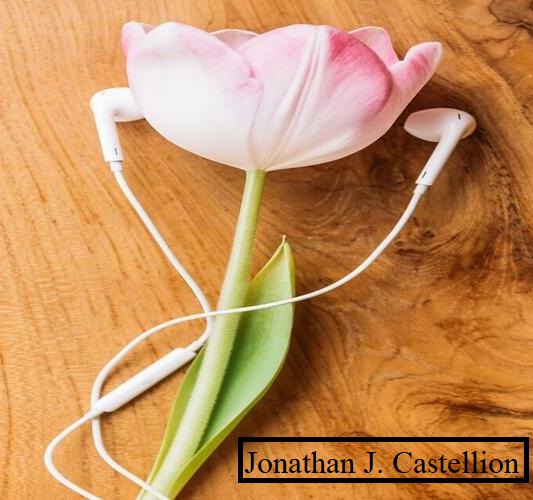 A plant does not ‘listen’ to music the same way we do. When we listen to music, the sounds are vibrations which are converted into electrical signals which your brain interprets. Phytoacoustics is the term coined for the study of how plants perceive, produce, and respond to sound waves. Scientists are tuning into this field of study because there is potential for phytoacoustics to advance precision agriculture technologies. Benefits could include increased crop output and a reduction in the use of fertilizers and pesticides, high frequency sound waves can retard the growth of some pathogenic fungi, and frequency changes (6) of a plant’s vibration relate to the plant’s hydric condition – vibrations with potential to communicate water stress.
Plants get information from all kinds of mechanical stimuli, including sound waves, through mechanosensing receptors on the plasma membranes of their cells. (e.g. the frequency of 200 Hz is associated with water flow and plant roots can sense and follow the sound waves of this frequency in the soil.)
Back to Bach. Why is it soothing? You music majors will know the answer, as explained by Carmen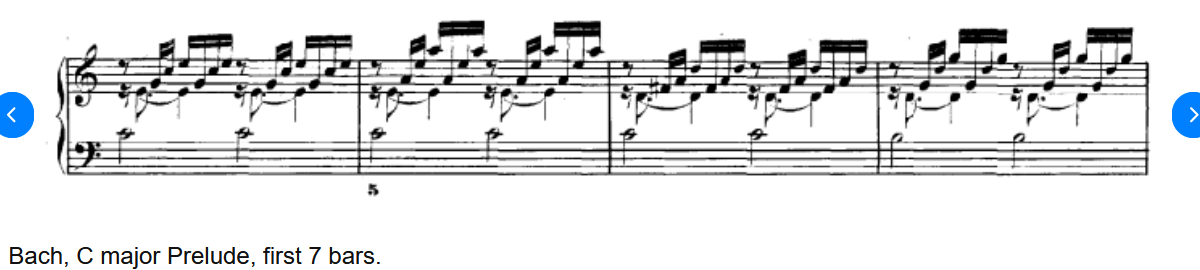 Chelaru. “Let’s take Bach’s Prelude No. 1, C major from the Well Tempered Clavier, Book I. The harmony claims the strict rules of the tonality. The chords relations are entirely authentic; there is a single modulation, from C major to G major -between close related keys. In the 35 bars of the Prelude, except the short modulation to G major, the harmony remains on the C major ‘territory’.”(1)
In 2023, Sharan and colleagues found that playing devotional music to Mung beans (4) led to better growth, like faster sprouting and more plant mass. This mix of music and farming science was well tested. The study showed that merging old wisdom with new techniques is valuable.
Other studies (5) show that meditative music, classical music, vedic chants, light Indian music, and rhythmic rock all can endorse the growth of plants. Research also shows that noise or dissonant rock music can actually stunt the growth of plants.
Even if you don’t believe that music has any effect on plant growth from a Western scientific point of  view, you still have the option that music does in a some mystical sense or, you could consider what the Buddhists, Hindus and Taoists have understood for thousands of years: We are all one, Everything in the cosmos is in communication and, All we have is now.
I send my friend an email today to ask if she had played the Bach yet. Her response, “I played it some for her yesterday and she loved it! I’ll try some more today.
Ruth
References and Resources:
Stalking the Wild Pendulum
Itzhak Bentov, 1977
E.P. Dutton, New York
The World is Sound, Nada Brahma, Music and the Landscape of Consciousness
Joachim-Ernst Berendt, 1983
Destiny Books, New York
The Wonderful (and Rather Dubious) Connection Between Plants and Music
Isaac Dayley on Jul 19, 2021, Idaho State Univ
https://blog.cetrain.isu.edu/blog/the-wonderful-and-rather-dubious-connection-between-plants-and-music
An Acoustic Communication Model in Plants
Fatih Merdan, Ozgur B. Akan, Nov 30, 2025
arXiv preprint arXiv:2512.01096, 2025•arxiv.org
https://arxiv.org/abs/2512.01096
(5) Effect of Music on Plants – An Overview
Anindita Roy Chowdhury and Anshu Gupta (2015).
International Journal of Integrative Sciences, Innovation and Technology (IJIIT), 4(6), 30 – 34.
https://www.researchgate.net/publication/291086163_Effect_of_Music_on_Plants_-_An_Overview
(1) Diatonic, Chromatic, Enharmonic; Consonance, Dissonance. Historical and Cultural Space Meanings
Carmen Chelaru, Faculty of Music Performance, George Enescu” University of Arts – Iasi (Romania), June 2012
Conference Paper: 13th WSEAS International Conference on Acoustics & Music: Latest Advances in Acoustics & MusicAt: George Enescu University of Arts Iasi – RomaniaVolume: ISBN: 978-1-61804-096-1
https://www.researchgate.net/figure/Bach-C-major-Prelude-first-7-bars_fig4_275045625
(2) MUTOR Music Technology Online Repository
Unit 4: Consonance and Dissonance
https://mutor-2.github.io/ScienceOfMusic/units/04/
(You can listen to a consonance and a dissonance sound! Audio by Víctor Gutiérrez)
(4) Music Makes Plants Grow: A Fresh Approach to Agriculture
Onolunose Oko-Ose, September 20, 2024
Yale Environmental Review
(Study published in the Journal of GeoInterface)
https://environment-review.yale.edu/music-makes-plants-grow-fresh-approach-agriculture
(6) Effects of hydric stress on vibrational frequency patterns of Capsicum annuum plants
Laura Helena Caicedo-Lopez, et. al., June 2020
Plant Signaling & Behavior, Vol 15, 2020, Issue 7
https://www.tandfonline.com/doi/full/10.1080/15592324.2020.1770489#abstract
I’m happy to report that Nora enjoyed the music so much, she has come out from under the couch finally!!