A Decade of Water Conservation – A Review – Part I
November 27, 2026
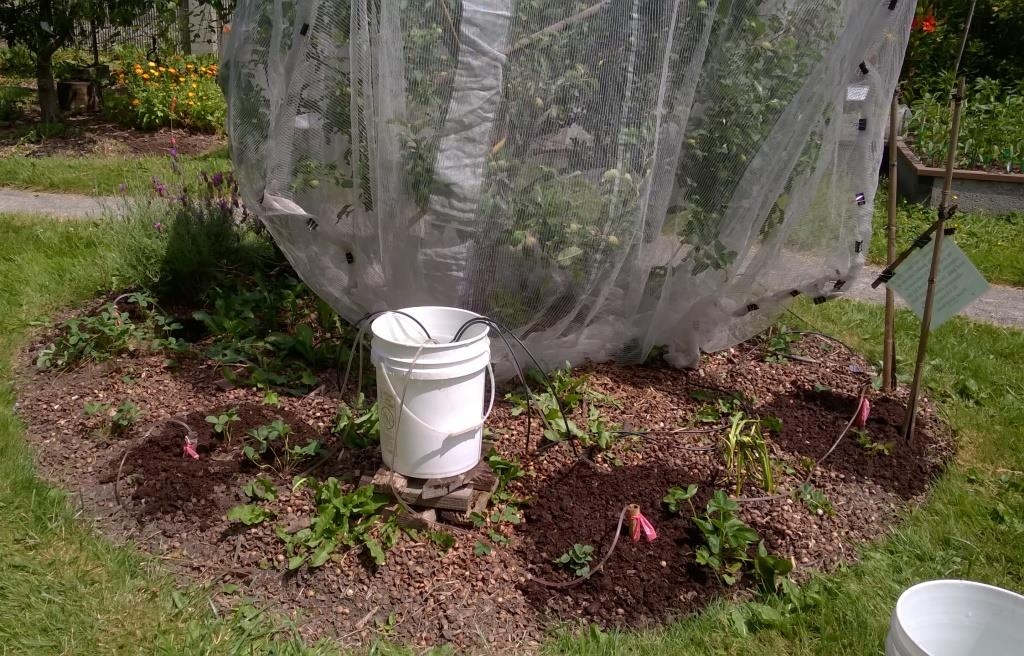
roots grow where watering is frequent
The Seattle area population is still growing and the demand for water is increasing, especially in the summer when Seattle gets very little rain. How can gardeners demand less water from the City tap!
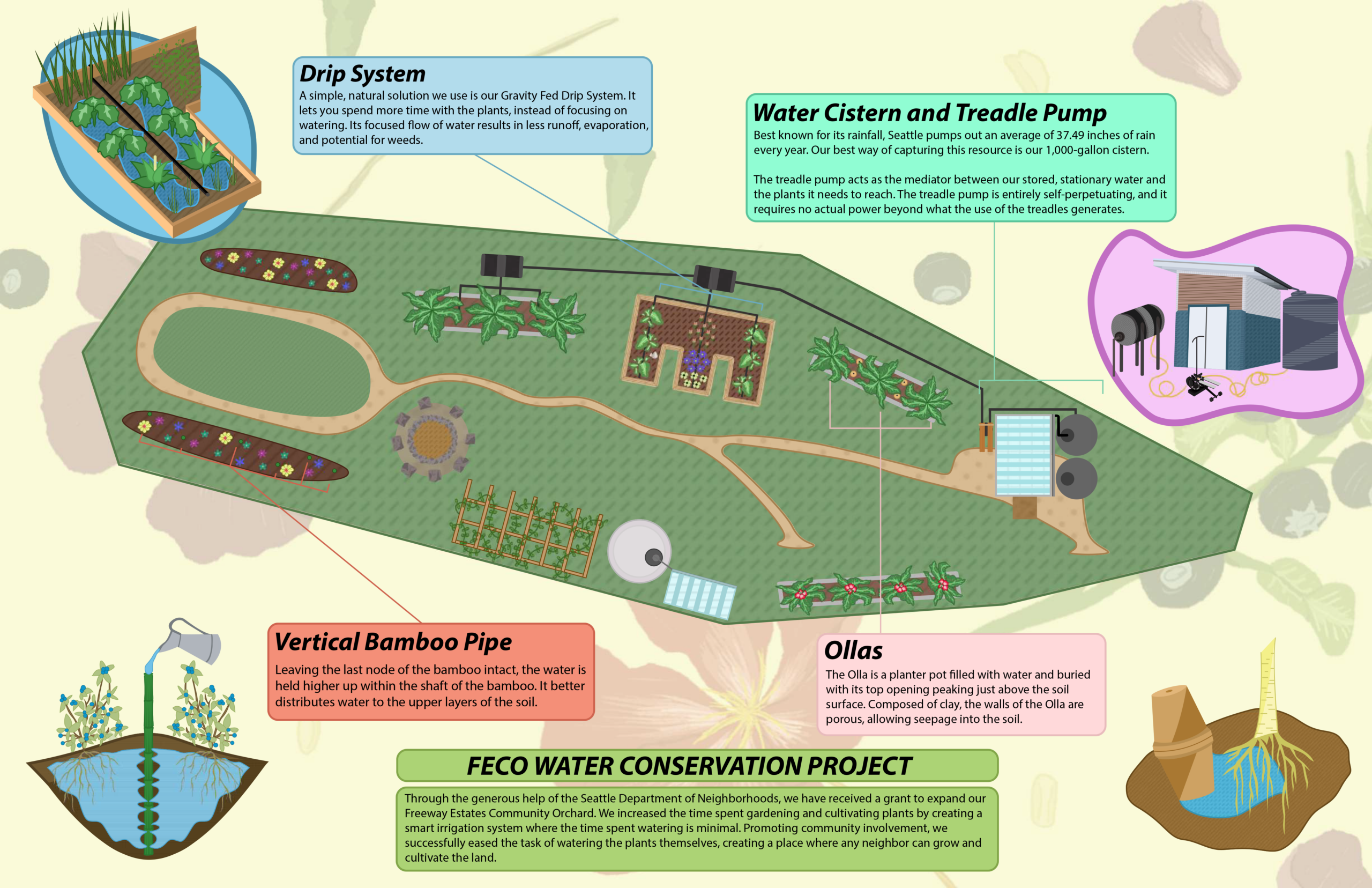
Close to ten years ago, FECO embarked on a plan to reduce its annual water use. Funded in part by a City of Seattle grant, we designed a water conservation system to demonstrate many water-savings techniques, including water catchment, gravity-fed drip irrigation, ollas and bamboo pipes, gravity-fed tubing to direct water to tree roots, moisture meters and soil probes, and mulch in guilds and garden beds (link to water cons web page). All techniques were intended to either: push water from our wet winters to our dry summers, reduce evaporation, channel water to the root zones of plants, or eliminate over watering.
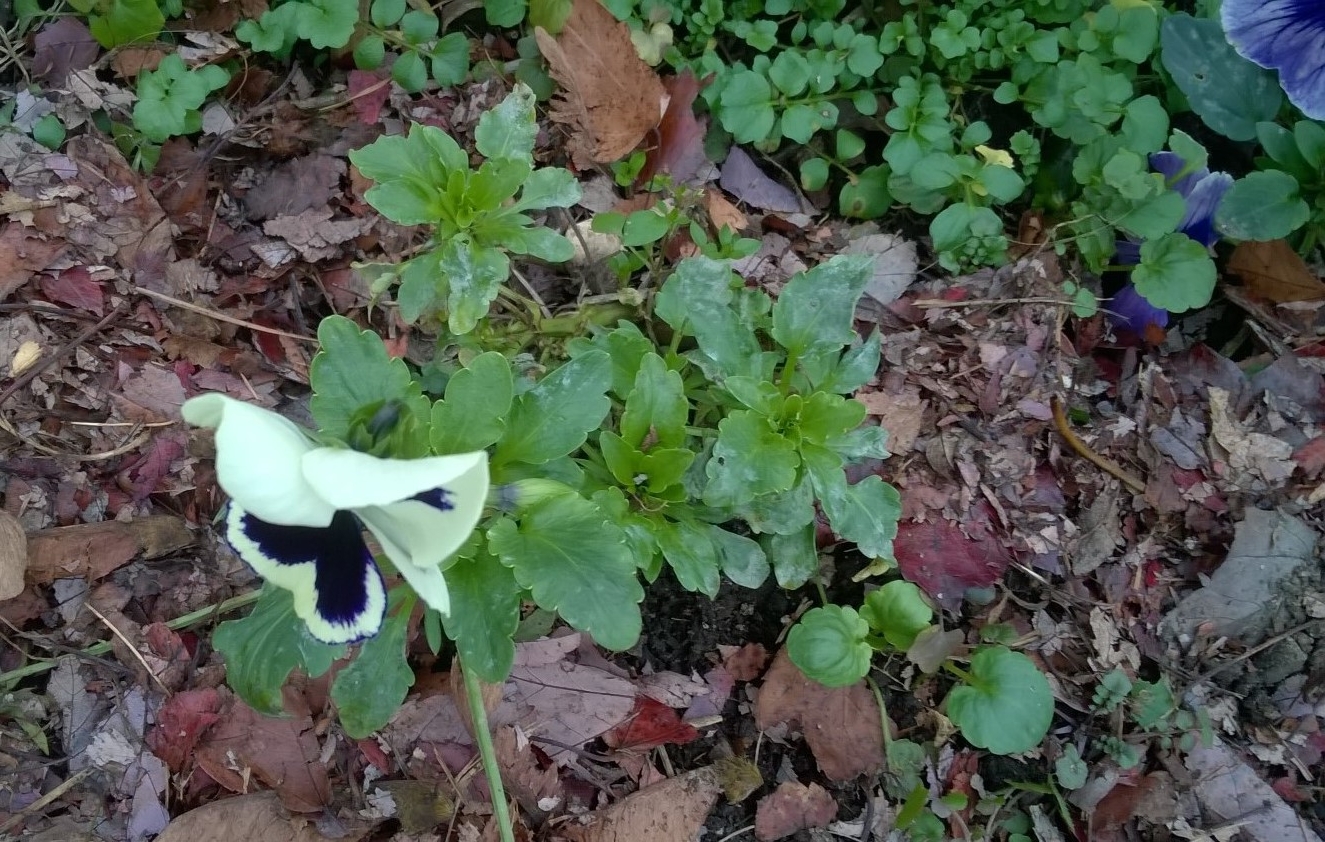
pansy gets the last drops of water
Overall, the project has been a huge success! We save 4,000 gallons of water each year through water catchment with additional savings through minimizing evaporation loss. Irrigation components have proven to be durable, and the components are easy to operate. Visitors can view and read about many different water-savings practices. See our Water Conservation webpage for a step-by-step explanation of the components and their installation. Having a water conservation emphasis also reminds visitors and volunteers how precious water is. In fact, we poured the last few drops from 5-gallon water buckets on one pansy plant and kept it blooming all summer!
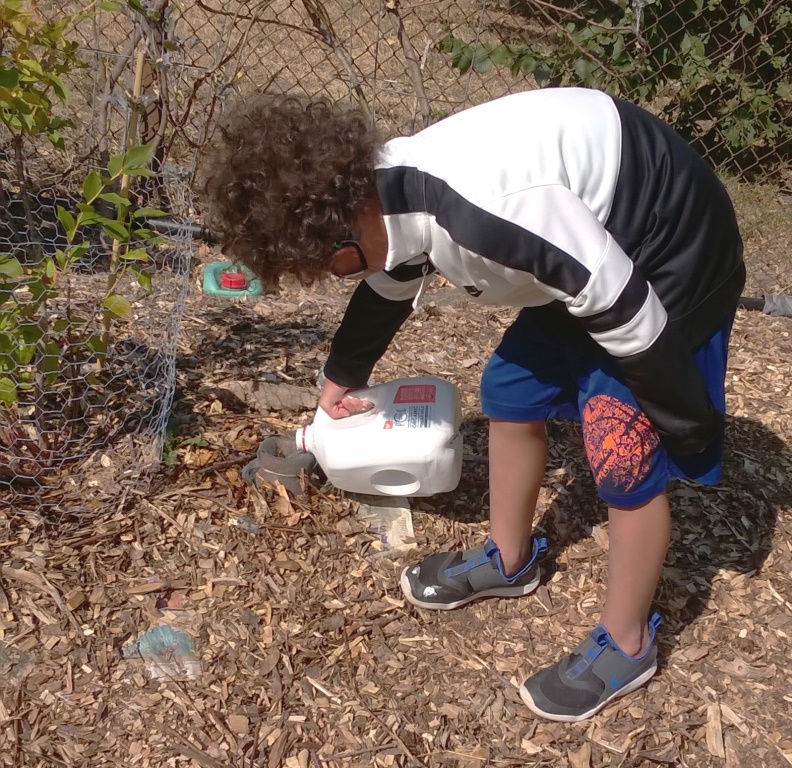
bamboo pipe next to blueberry
It’s time to assess how much water we saved, how durable the system has been, its ease of use and its impact on volunteer hours.
Sue overseas the food bank garden beds and tracks her water use for the food bank garden beds. She is pleased with the system:
for work parties
Please email to volunteer
freewayestatescommunityorchard@gmail
“The ollas and the drip system with take-apart emitters (‘moving arms’ attached to the water lines) have been the most successful. Both systems deliver water closer to the soil and roots. Unlike overhead sprinklers, less water is lost to evaporation and the risk of exposure to water-transmitted diseases is reduced.
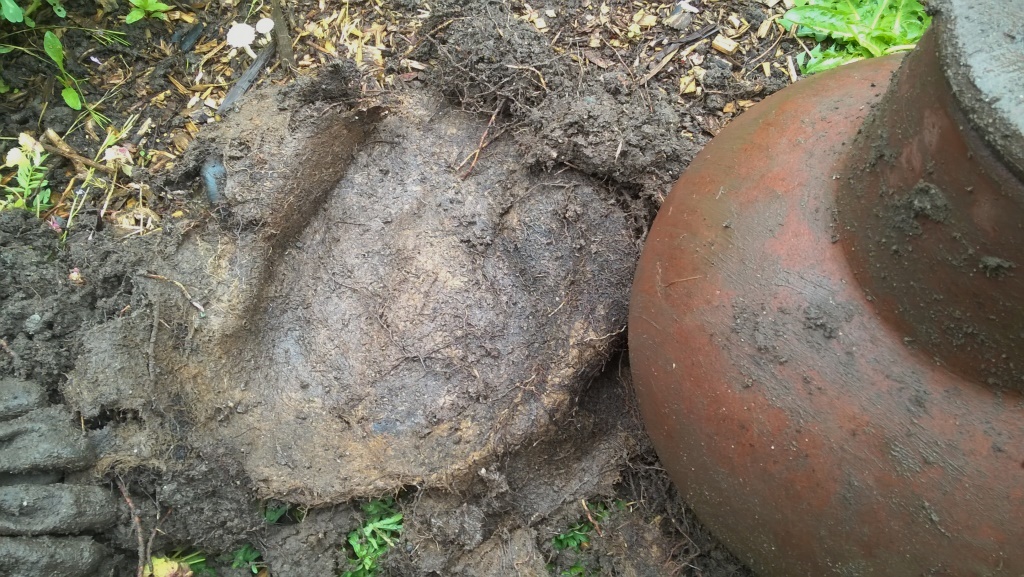
root mat next to olla
“The ollas are installed below ground and the terracotta clay slowly bleeds water out to the roots. The take-apart emitters (They can be taken apart for cleaning) allow us to move the ‘arm’ to target specific plants. The emitters can be positioned closer to the root zone of small plants and then re-positioned later as the plant grows.
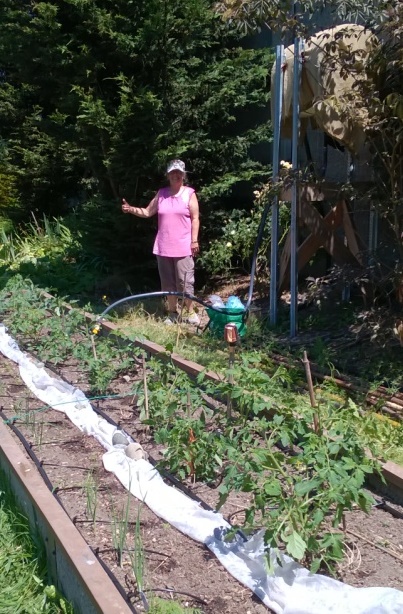
take-apart emitters
“Using the gravity-fed systems saves time. You can turn on the drip system, set an alarm on your phone, and then tend to other gardening tasks. The take-apart emitter garden bed may take 20-30 minutes to deliver 15-20 gallons of water. The soaker drip lines take longer to push out the same amount of water.
“The main advantage of the whole design is that we are able to better track how much water we are using. Tracking is harder to do with a hose or watering cans. Also, our system does not need to be shut down in times of rain; you just don’t water!”
Would be do this again, or recommend these water conservation measures to another community garden? Before we all pat ourselves on the back for our creative and long-lived water conservation system, we need to also discuss the labor to keep up this infrastructure and the environmental footprint of all of this plastic! Stay tuned for Part II next month.
Ruth Callard
Eager for part two!