
Rooting for Roots – Soil Carbon Sequestration
March 25, 2026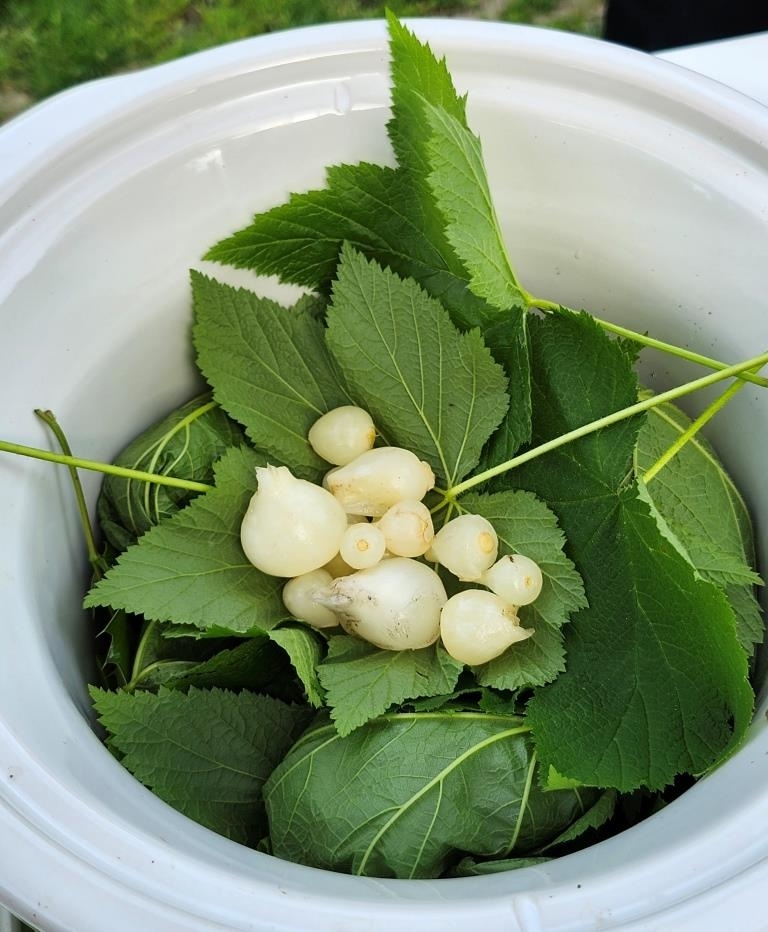
What could be better than increasing soil organic carbon?
What could be better than eating the plants that increase soil organic carbon?
What could be better than eating the plants native to the Pacific Northwest that increase soil organic carbon?
Nothing! Hip hip Hurrah!
What could be harder than growing native edible plants?
What could be harder than growing native edible plants and liking them?
What could be harder than growing native edible plants, liking them and understanding soil carbon sequestration?
Nothing! … Just kidding
I won’t admit how many articles I had to read to get some sense of the process of mineral-associated organic carbon (MAOC), (or, a Maddening, Arduous, Opportunity for Clarity). Please do your own research.
for work parties
Plant Sale! Sat. 04/11, 1-4
Please email to volunteer
freewayestatescommunityorchard@gmail
Scientists know that tilling of the soil for annual row crops results in the escape of soil carbon into the atmosphere. But some scientists think that the conversion of prairie (see note 1), or some other perennial ecosystem, to annual crops results in a more serious loss of soil carbon.
 CO2 in the atmosphere is taken in by plants and the carbon will either end up on top of the soil from above-ground plant debris or below ground in the root zone. Above-ground plant debris is important to improve soil qualities but the potential for more soil organic carbon (SOC) accumulation is down in the root zone, due to the addition of root exudates (‘carbon cookies’ released from the plant’s fine roots in order to attract soil microorganisms). When these plant root exudates combine with the microbial residues, dead detritus or soil minerals, the carbon can remain in the soil via the physical protection of soil aggregates or mineral-chemical binding. The carbon is basically protected from decomposition. Alas! soil carbon sequestration.
Fungi can produce more microbial residues than bacteria. Symbiotic fungal relationships with plant roots take time to develop and these relationships are ongoing, as long as the soil is not dug up each year. Long live the fungi!
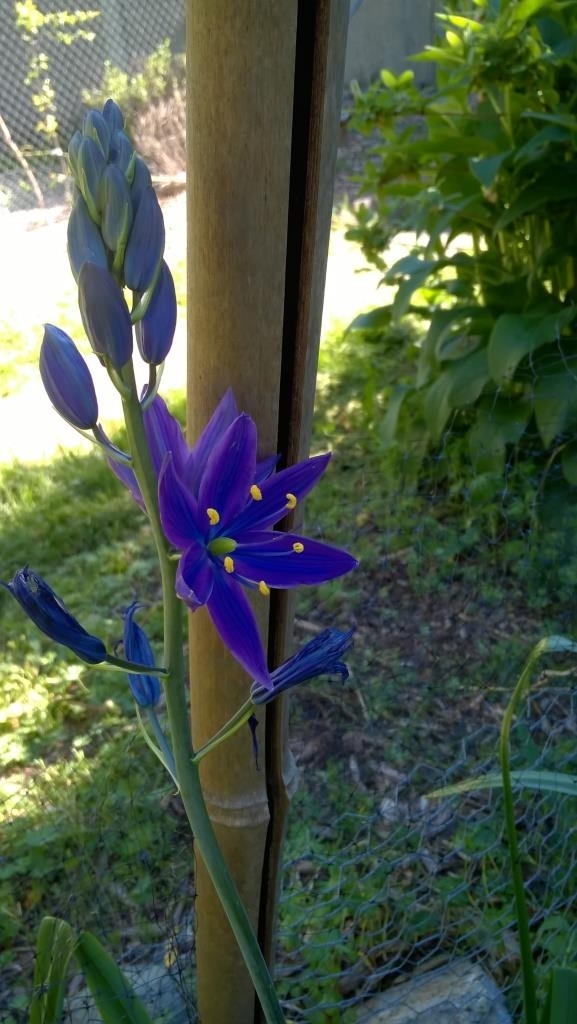
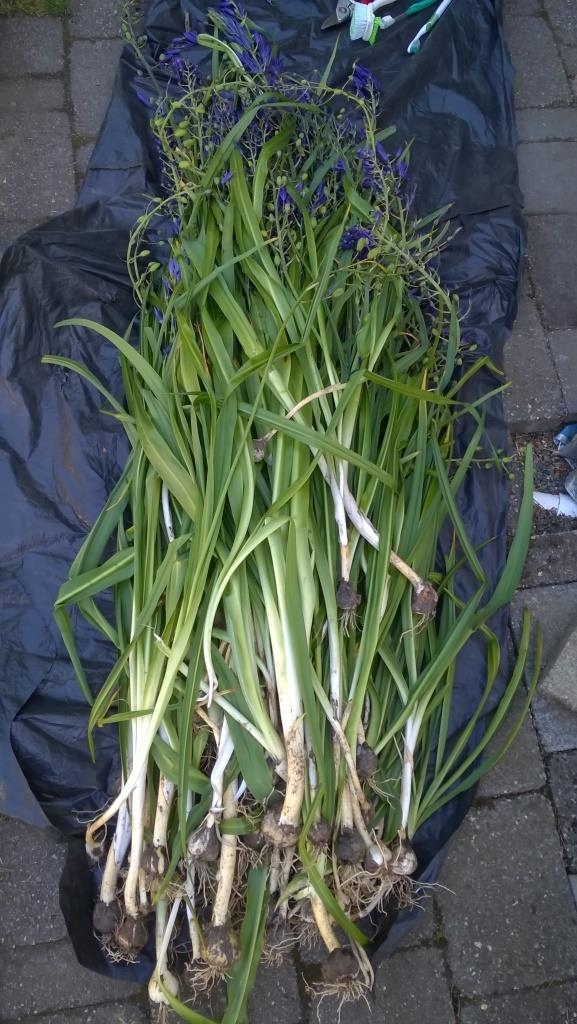 Our native Great Camas (Camassia leichtlinii) fits the bill for a deep-rooted native that is easy to grow and wonderfully nutritious. The plant builds a permanent root structure and crown. I have dug down 14 inches to reach the roots of this bulb! We take a few big ones and put back some smaller ones, making the least disturbance as possible.
Other perennial native plants that are very nutritious include Arrowleaf balsamroot (Balsamorhiza sagittata ), Stinging nettle (Urtica dioica subsp. gracilis ), blue elderberry (Sambucus nigra subsp. cerulea), Cusick’s sunflower (Helianthus cusickii) and, if you have a wet spot, Wapato (Sagittaria latifolia) and Pacific silverweed (Argentina egedii ).
And there are so many other perennial vegetables that are not native. Any perennial plant helps with carbon sequestration – year round!
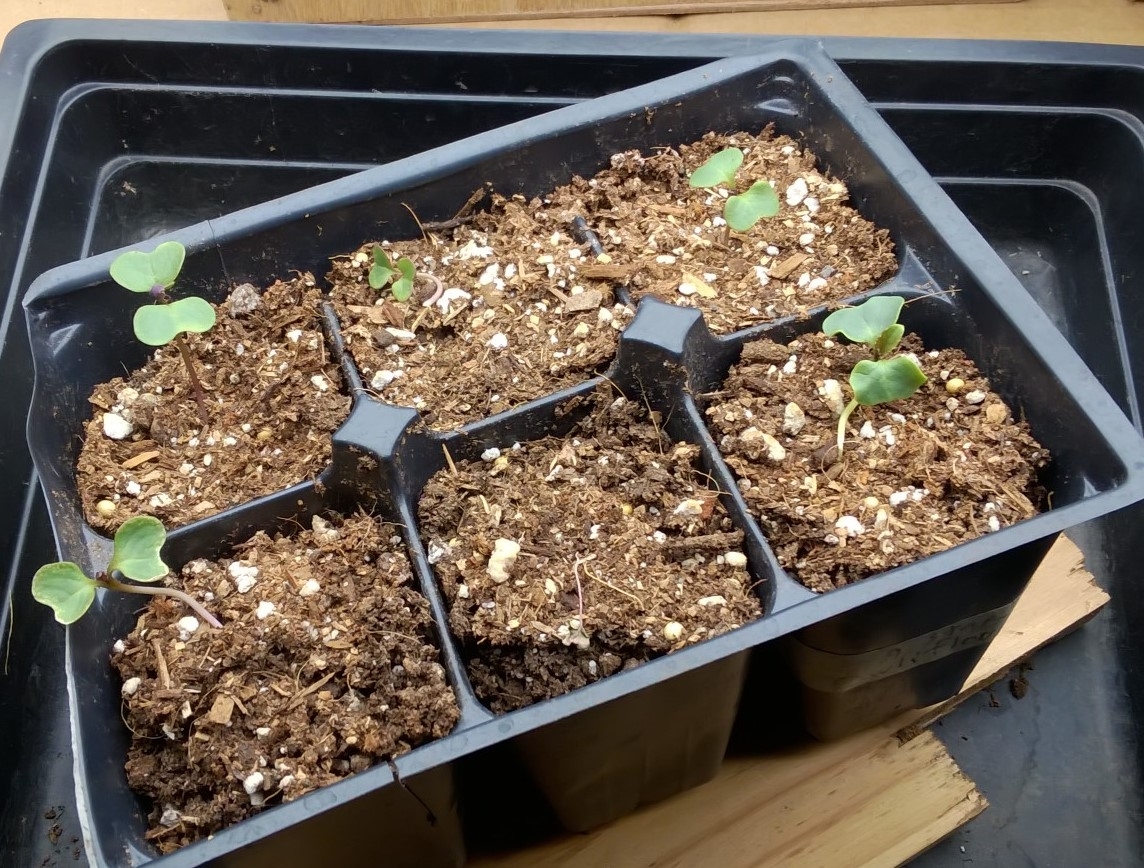 I found a seed company in British Columbia, Small Island Seed Co., that specializes in perennial seeds. This year I ordered: Nine Star Perennial Cauliflower – Brassica Oleraceae (see photo of the little babies), Skirret – growing guide (Canada) Sium Sisarum, Salad Burnet – Sanguisorba Minor, Good King Henry – Blitum Bonus-Henricus, and Black Chokeberry – Aronia melanocarpa. Wish me luck!
Tell us what you perennial vegetables that you have tried! Has anyone dared to try to grow Nopales?
Ruth
Note 1: The prairies in the mid-west are now about 3% of what existed before Europeans came. A lot of carbon was released during this conversion. However, there is still hope. Busy minds are now working on perennial grain crops. Kernza perennial grain is already in pilot-scale production in the U.S. and those in the R&D stage are perennial wheat, perennial grain sorghum, perennial oilseed sunflower, and two perennial legumes (a protein-rich grain comparable to a bean).
Resources used:
Root Exudates Mediate the Processes of Soil Organic Carbon Input and Efflux
Lei X, Shen Y, Zhao J, Huang J, Wang H, Yu Y, Xiao C.
Plants (Basel). 2023 Jan 31;12(3):630. doi: 10.3390/plants12030630.
https://pmc.ncbi.nlm.nih.gov/articles/PMC9919716/
Perennializing Grain Crop Agriculture: A Pathway for Climate Change Mitigation & Adaption
The Land Institute, Salina, KS, February 13, 2020
Click to access Land-Institute-2019-2020-soil-carbon-white-paper-v3-final.pdf
A Complex Prairie Ecosystem
National Parks Service
https://www.nps.gov/tapr/learn/nature/a-complex-prairie-ecosystem.htm#:~:text=Less%20than%204%25%20of%20the,at%20Tallgrass%20Prairie%20National%20Preserve.
Tillage and soil carbon sequestration—What do we really know?
John M. Baker , et. al,
Agriculture, Ecosystems and Environment 118 (2007) 1–5
Click to access Tillageandsoilcarbonsequestration.pdf
Deconstructing the microbial necromass continuum to inform soil carbon sequestration
Kate M. Buckeridge
Functional Ecology, January 2, 2022
Leave a Reply
Want to join the discussion?Feel free to contribute!