
Prepare for Climate Change – BIPOC Gardening Lessons
February 23, 2026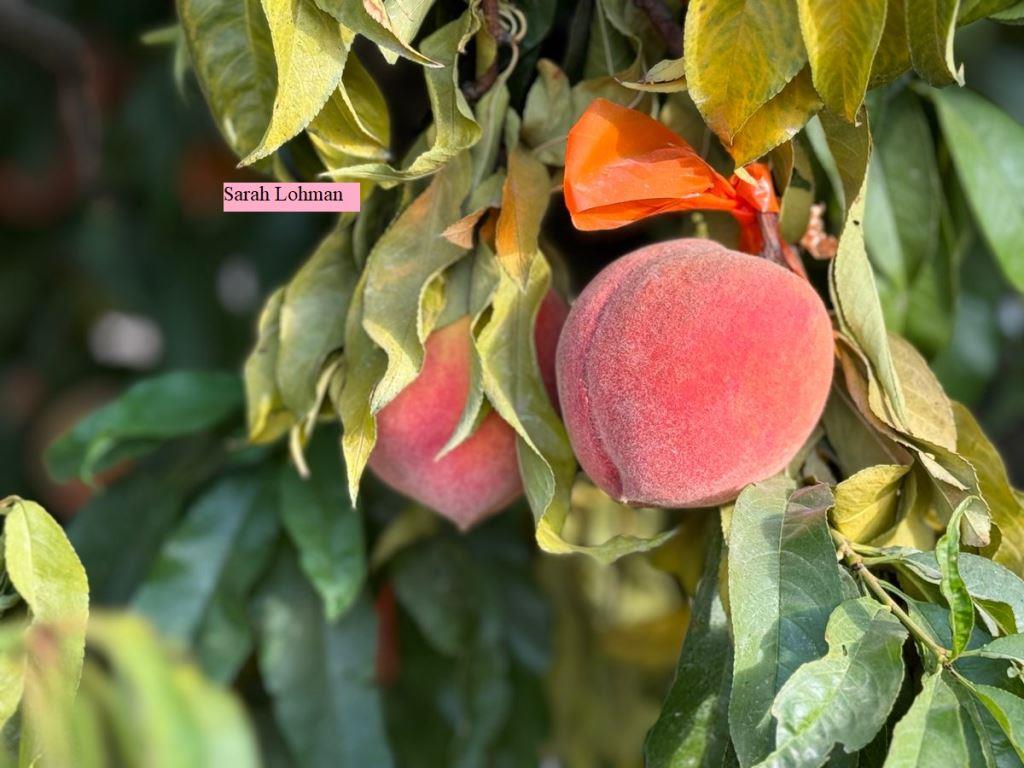
In the mid 1980s, prices for Sun Crest peaches plummeted. Fruit brokers advised farmers to dump their peaches. Aghast at the idea, Mas Masumoto, a Japanese farmer in the Central Valley of California, sold his boxes of peaches for 50 cents each. From Japanese Buddhism, you say Itadakimasu before you eat. This means verbalizing all in nature and all labor that went into producing your food. With this kind of reverence for food, waste is unthinkable. This farmer had too much respect for the peaches to throw them away. Mottainai.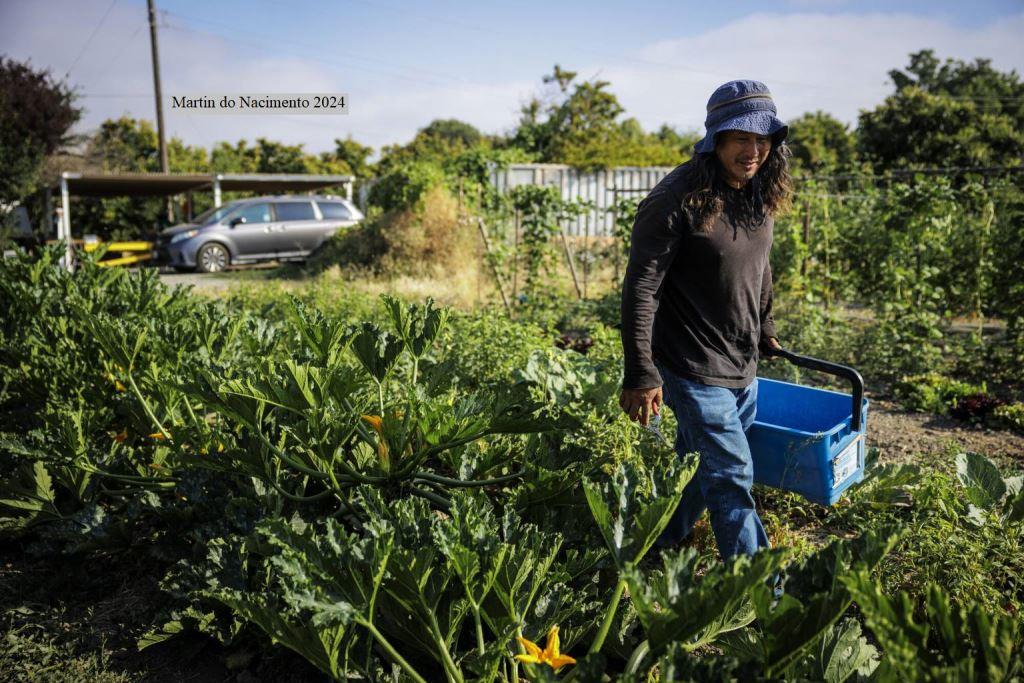
This kind of relationship to the land, that of reciprocity and respect, still guides the agricultural practices in much of Asia, Mexico and, of course, within our Indigenous population. We are lucky to have agricultural information available from our BIPOC land stewards and food producers. However, we may lose this sustainable traditional knowledge because the farming techniques used depend on long-term access to farmland. Land tenure opportunities are decreasing for many reasons including farmland acquisition by large pension funds. Other barriers to land access for BIPOC farmers are listed in Note 1.
Examples of BIPOC techniques for growing climate-resilient food plants are listed below. These techniques are based on hundreds and thousands of years of careful observation as to what works best in a particular environment.
• No-till planting – Conservation tillage systems reduce production costs and labor, and decrease fossil fuel use. In no-till farming, planting takes place in undisturbed soil, avoiding mechanical procedures that increase soil erosion and compaction.
• Agroforestry – The Maya cultivated within a forest opening so there would be forest plant seeds for rapid forest regrowth following several years of food cultivation. Weeds pulled or cut were left in the field. Crops were integrated with perennial food plants, including fruit trees. Companion crops were selected from dozens of cultivars. Traditional Maya farming, still practiced today, represents investment in the conservation of the landscape, from the soil to the trees, promoting biodiversity and animal habitat essential to the sustainability of a subsistence system.
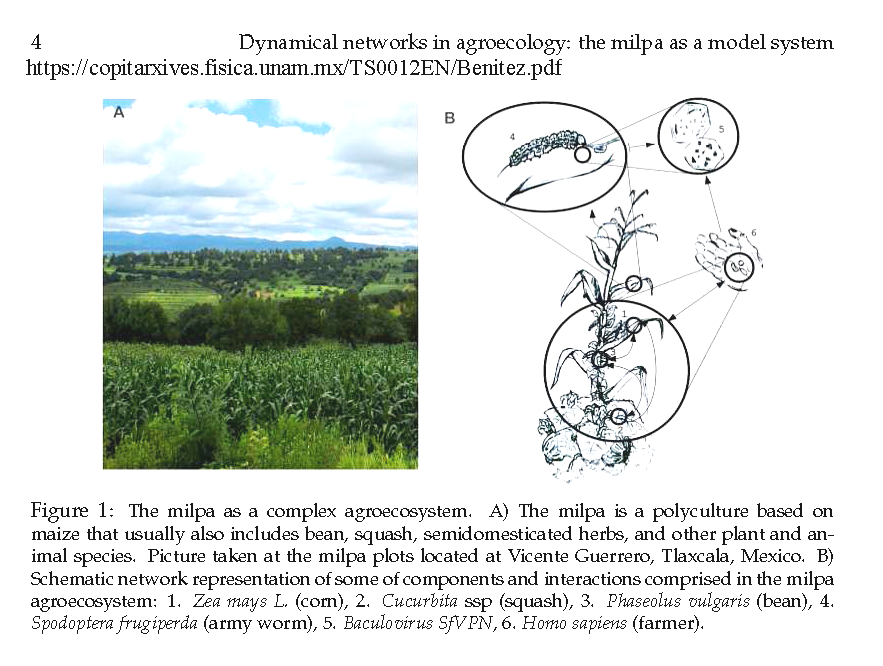 • Polycroping/intercroping – Intercropping enables cropping systems to recycle their own stored nutrients, without loss of productivity. Land equivalent ratio (LER) is the most widely used measure of yield advantage for multi-crop farms versus sole-crop farms, and usually measured using crop biomass yield per unit area. For example, many Native American agriculturalists intercropped maize, beans, squash, and sometimes sunflowers—called the three (or four) sisters—because these crops were observed to thrive together and provided dietary diversity.
• Short-season crops – Farmers take preventive precautions to prevent crop loss by planting short-season crops in anticipation of unpredictable rainfall and the absence of rainfall during their growing season. Short-season crops possess significant potential to mitigate the difficulties posed by unpredictable and delayed precipitation.
• Cover crops – Planting cover crops in the off-season replaces the nutrients that you harvested. Adding green manure to the the soil enhances its ability to hold moisture and increases its fertility. Deep-rooted ground covers, crops and perennials are several times more efficient at carbon sequestration than above-ground litter.
• Water Conservation -The Zuni are among several Southwestern Native American tribes known for 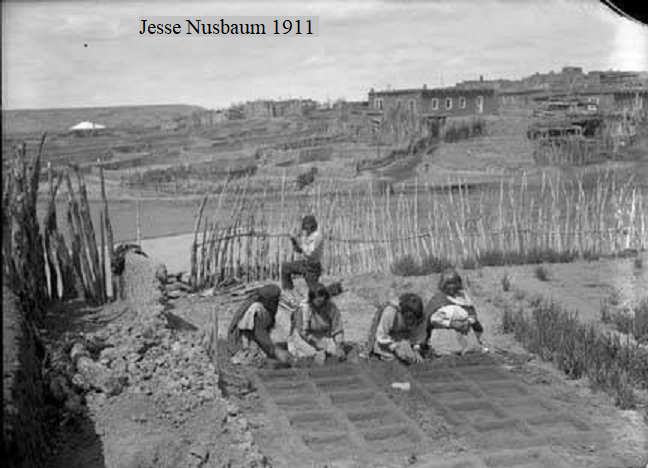 runoff agriculture, a farming method adapted by people living with drought. Fields are positioned to collect and manage incoming runoff from higher ground. Runoff water transports nutrient-rich organic matter and sediments from watersheds to fields, which in turn boosts the sustainability of agricultural productivity.
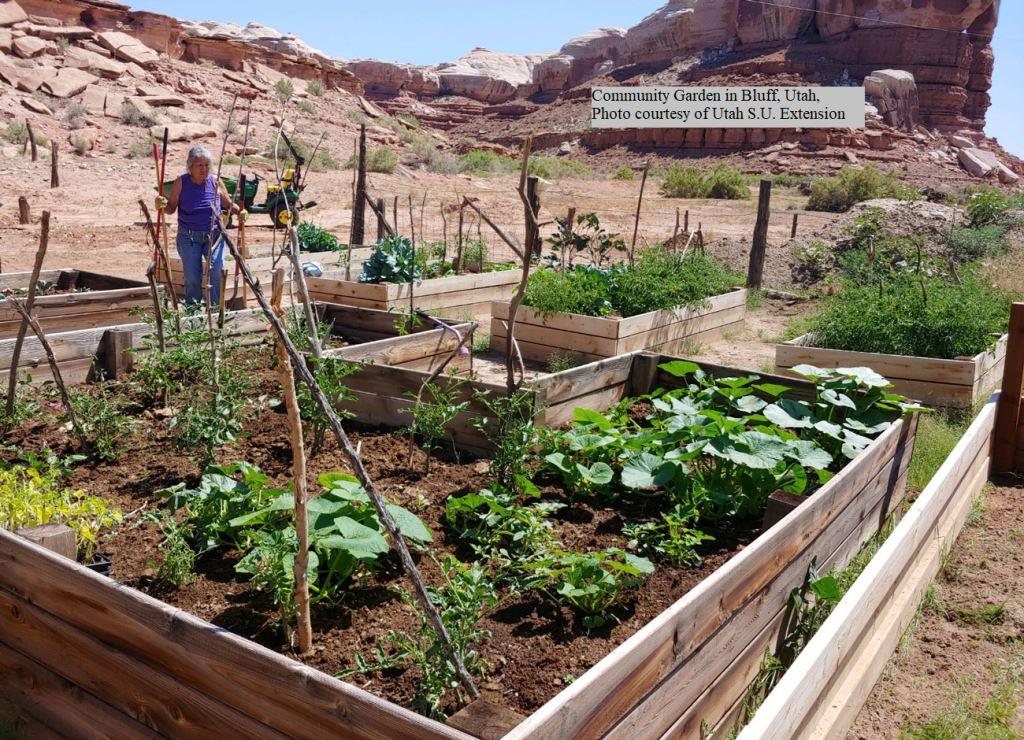 • Seed saving -African Americans hid seeds in their hair and Native Americans sewed seeds in their skirts, in order to be able to plant their culturally significant and nutritious crops. This cultural practice helps to build up the diversity of our seed bank. Many commercial seeds are not produced to make the best mycorrhizal connections in your specific landscape.
• Community-based responses to climate change – Indigenous Peoples have developed safety nets and solidarity based on social organization and governance systems that they mobilize during times of food scarcity. Their traditional governance systems strengthen social cohesion through the collective decision-making processes.
USDA policies meant to help marginalized farmers have recently been rolled back, or are stalled by lawsuits alleging reverse discrimination. However, many State initiatives for BIPOC farmers equity are still going strong. For example, California, in recent years, has enacted several policies and programs intended to improve land access for the State’s socially disadvantaged farmers and ranchers. Many non-profit organizations are based on equity principles. See note 2 for links to State and Regional organizations committed to help disadvantaged farmers. Our Washington State Housing Authority launched the Farmland Protection & Affordability Investment (FarmPAI) Program (2021). The program protects at-risk farmland to keep it in production while lowering barriers to land access for beginning or historically underserved farmers and ranchers.
Amah Mutsun Tribal Band Chair Valentin Lopez:
“The most important thing of all restoration is that you restore spirituality. To restore the spirituality to
the land and to the people and to the rivers, and to the ocean, to the fish, the birds. We need to restore
the spirituality for all.”
Ruth
——–
Note 1 – BIPOC cultures face/faced every barrier you can think of in their quest to work with land. Barriers such as loan fraud, stolen land, laws against land ownership, fees and fines, confusing workers compensation laws, short-term or broken leases, herbicide drift, appropriation and loss of Traditional Ecological Knowledge (TEK), exclusion from decision-making, and bans on cultural practices.
Note 2 – Links to State and Regional organizations committed to help disadvantaged farmers:
Black Farmers Collective – focuses on food sovereignty, operating Small Axe Farm as an incubator with land, equipment, and wash-pack stations for BIPOC farmers
PNW BIPOC Farmland Trust – Dedicated to acquiring land to hold in trust, aiming to lease it to BIPOC farmers at below-market rates.
Tilth Alliance – These groups provide essential resources, including land access, equipment, training, and community-focused infrastructure
Adelante Mujeres – Operates a Sustainable Agriculture Program providing training and land access specifically for Latina immigrant farmers.
New Roots Program (International Rescue Committee) – Helping members settle into new communities by connecting them to available land that is shared with other refugees and immigrants
The Washington Hmong Farmers Cooperative (WHFC) (formerly the Indochinese Farm Project)
The WHFC helps Hmong farmers reach customers beyond traditional farmers’ markets by connecting them to diverse buyers.
PCC (Organic Producer Grants)- Nearly 70 percent of grant awardees belong to historically underserved communities, including recipients who are BIPOC, immigrants, veterans, LGBTQIA+, and women sole proprietors
Na’ah Illahee Fund – We partner with Tribes, Native nonprofits, and allied organizations to identify opportunities, raise capital, and move land back into Indigenous hands—whether in rural homelands or urban neighborhoods.
References:
Native Plants and Climate Change: Indigenous Perspectives Part I
What Is, And What Can Be: Traditional Regenerative
Julia Cordero-Lamb (Coastal Band of the Chumash Nation)
Horticulture In Syuxtun (Santa Barbara) p6-12
Artemesia: Journal of the California Native Plant Society, Vol 49, #2, October 2023
Click to access Artemisia-V49N2-lowres-2-1.pdf
Restoring Access And Stewardship To Culturally Significant Landscapes In An Era Of Climate Change: Lessons From The Amah Mutsun Tribal Band p11
Alexii Sigona, Alec Apodaca, and Annalise Taylor
Artemesia: Journal of the California Native Plant Society, Vol 50, #1, August 2024
https://publications.cnps.org/books/rjux/#p=1
Indigenous Agroecological Knowledge And Practices For Climate Change Adaptation In The Forest-Savanna Transition Zone At Batchenga in the Centre Region of Cameroon
Pierre Marie Chimi1, et al.
Discover Environment (2025) 3:16, Feb 17, 2025
Click to access s44274-025-00192-z.pdf
In Brief: Indigenous Peoples’ Food Systems – Insights on sustainability and resilience from the front line of climate change
FAO and Alliance of Bioversity International and CIAT, Rome, 2023
https://openknowledge.fao.org/server/api/core/bitstreams/22570239-06f1-4529-a2aa-d5ed50612106/content
Indigenous Adaptation Practices For Small-Scale Farmers: Lessons For Climate Policy
Sejabaledi A. Rankoana
International Journal of Development and Sustainability, Volume 13 Number 12 (2024): P 1059-1070
Click to access ijds-v13n12-02.pdf
The Milpa Cycle And The Making Of The Maya Forest Garden
Anabel Ford and Ronald Nigh
Research Reports in Belizean Archae%gy, Vol. 7, 20 I 0, pp. 183-190.
Click to access 10%20AF%20Milpa%20Cycle%20MFG.pdf
The Robustness of Land Equivalent Ratio as a Measure of Yield Advantage of Multi-Crop Systems over Monocultures
Debal Deb and Streejata Dutta
Consortium for Agroecological Transformations, December 23, 2024
Click to access The_Robustness_of_Land_Equivalent_Ratio_as_a_Measu.pdf
Tillage and soil carbon sequestration—What do we really know?
John M. Baker , et al.
Agriculture, Ecosystems and Environment 118 (2007) 1–5
Click to access Tillageandsoilcarbonsequestration.pdf
Understanding why farmers adopt soil conservation tillage: A systematic review
Macson O. Ogieriakhi, Richard T. Woodward
Soil Security 9 (2002) 100077
https://www.sciencedirect.com/science/article/pii/S2667006222000430
Perennializing Grain Crop Agriculture: A Pathway for Climate Change Mitigation & Adaption
Fred Iutzi, MS and Tim Crews, PhD
The Land Institute, Salina, KS, February 13, 2020
www.landinstitute.org
Click to access Land-Institute-2019-2020-soil-carbon-white-paper-v3-final.pdf
Indigenous Roots of Climate Farming – Traditional land-management techniques practiced by Native American peoples are paving the way for a more resilient future
By Jeff Meyer
Mother Earth News, December 8, 2021
https://www.motherearthnews.com/homesteading-and-livestock/sustainable-farming/climate-farming-indigenous-roots-zm0zdj21zols/
California Will Help BIPOC Collective Cultivate Land Access for Underserved Farmers
Naoki Nitta
Civil Eats, October 24, 2023
‘https://civileats.com/2023/10/24/california-will-help-bipoc-collective-cultivate-land-access-for-underserved-farmers/
Land equity in California: Challenges and opportunities across the policy landscape
Sean F. Kennedy, Camille Frazier
Elementa: Science of the Anthropocene (2024) 12 (1): 00106.
https://online.ucpress.edu/elementa/article/12/1/00106/200298/Land-equity-in-California-Challenges-and
Leave a Reply
Want to join the discussion?Feel free to contribute!